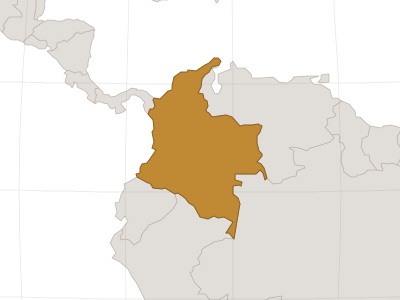
Origins and farming Honduras, Nicaragua, Brazil
NOAA says El Niño is still strengthening, with a historic event likely this winter
NOAA's Climate Prediction Center said on 8 October 2026 that El Niño had strengthened again, with the Niño-3.4 index at +2.1°C, and put the chance of a record-strength event in October to December at 83%. The ICO treats El Niño as a two-sided risk for coffee prices, pointing to drought alerts in Honduras and Nicaragua and to Brazil's flowering season.
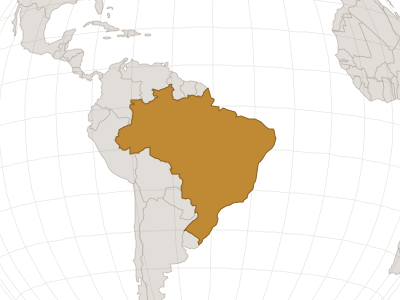
Key points
- Surface waters in parts of the eastern equatorial Pacific ran more than 4.0°C above normal in September.
- NOAA counts an event as historic when a three-month RONI value reaches +2.5°C or more, beyond any El Niño since 1950.
- It puts the odds of crossing that line at 54% for September to November, 83% for October to December and 70% for November to January.
- In August the ICO tied a mid-month price rally partly to El Niño fears ahead of Brazil's September and October flowering, which shapes the 2027/28 Arabica crop.
- NOAA's next ENSO discussion is scheduled for 12 November 2026.
Most Niño indices rose during September, reaching +2.1°C in Niño-3.4, +3.0°C in Niño-3 and +3.9°C in Niño-1+2. Below the surface the eastern Pacific was more than 10°C warmer than average at depth, westerly wind anomalies stretched across much of the equatorial Pacific, and rainfall was enhanced from the central to the eastern Pacific but suppressed over Indonesia. NOAA reads the ocean and atmosphere together as a strengthening El Niño.
Its official outlook, which combines models from North America and elsewhere, has the event growing through the end of 2026 and staying strong to very strong through January to March 2027. NOAA adds that an event of this size makes typical El Niño impacts more likely but does not guarantee them.
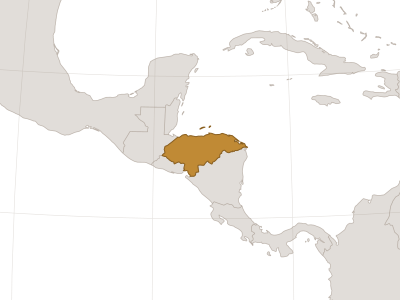
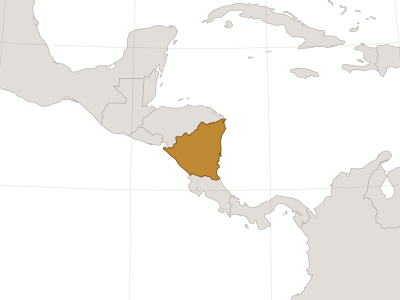
NOAA's discussion does not mention coffee; the link comes from the ICO. Its September market report lists weather and climate as a two-sided price factor: NOAA's 10 September outlook of a greater than 90% chance of a very strong event added a risk premium, while September rain generally helped flowering and early fruit set in Brazil. The ICO named late-September heat, doubt about follow-up rain in October and drought alerts in Honduras and Nicaragua, which could limit washed Arabica supply, as the remaining risks.
El Niño has run through the market for months. In its August report the ICO said NOAA had given a 69% chance on 13 August that the October to December event would be the strongest since 1950, and linked the 17 to 25 August price rise to that outlook. In May, Nicaragua's central bank cited a 61% chance of El Niño when it set the country's 2026/27 coffee target 7.1% below the previous cycle.
The numbers
- Niño-3.4 sea surface temperature anomaly
- 2.1°C
- Niño-3 sea surface temperature anomaly
- 3°C
- Niño-1+2 sea surface temperature anomaly
- 3.9°C
- Threshold for a historic El Niño (three-month RONI value)
- 2.5°C
- Chance of a record-strength El Niño, September to November 2026
- 54%
- Chance of a record-strength El Niño, October to December 2026
- 83%
- Chance of a record-strength El Niño, November to January
- 70%
- NOAA chance of a very strong El Niño, 10 September outlook (cited by the ICO)
- 90% (greater than)
- NOAA chance of a record October to December event, 13 August outlook (cited by the ICO)
- 69%
- El Niño probability cited in Nicaragua's 2026/27 production plan
- 61%
Sources
- Government notice ENSO Diagnostic Discussion, issued 8 October 2026 NOAA Climate Prediction Centercpc.ncep.noaa.gov Published Read
- Statistical release Coffee Market Report – September 2026 International Coffee Organizationico.org Published Read
- Statistical release Coffee Market Report – August 2026 International Coffee Organizationico.org Published Read
- Government notice Presidente del BCN presenta "Plan Nacional de Producción, Consumo y Comercio 2026-2027" ante la Asamblea Nacional Banco Central de Nicaraguabcn.gob.ni Published Read
More coffee news
All stories- Origins
El Niño strengthens again; NOAA puts odds of a record event near 60%
El Niño grew stronger in October, NOAA's Climate Prediction Center said on 12 November 2026, with sea temperatures in the Niño-3.4 region 2.5C above normal. It gives better than a 79% chance of a strong-to-very-strong event through January to March 2027 and about 60% for a record-breaking one. Colombia's growers' federation and the ICO both flag risks for coming coffee harvests. - Origins
Nicaragua's central bank projects a 3 million-quintal coffee harvest for 2026/27
Nicaragua expects to produce about 3 million quintales of coffee in the 2026/27 cycle and sell it at an average US$294 per quintal, central bank president Ovidio Reyes said on 29 October 2026. He said coffee exports had reached US$691 million by the end of September, after a record US$918 million in 2025. - Origins
Conab raises Brazil's 2026 coffee crop estimate to 67.6 million bags
Brazil's crop agency Conab estimated the 2026 coffee harvest at 67.6 million 60 kg bags in its third survey, published on 24 September with 99% of the area picked. That is 19.6% more than in 2025, driven by a 34.8% rise in arabica in an on-year of the biennial cycle, while conilon output fell 6.6%.