Origins and farming Brazil
Conab raises Brazil's 2026 coffee crop estimate to 67.6 million bags
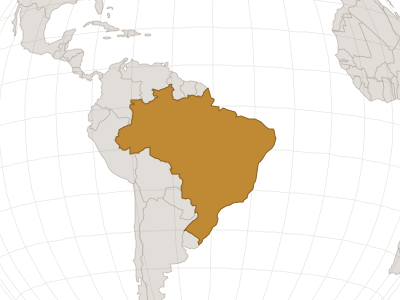
Brazil's crop agency Conab estimated the 2026 coffee harvest at 67.6 million 60 kg bags in its third survey, published on 24 September with 99% of the area picked. That is 19.6% more than in 2025, driven by a 34.8% rise in arabica in an on-year of the biennial cycle, while conilon output fell 6.6%.
Key points
- Minas Gerais alone is expected to produce 35.6 million bags, 38.2% more than in 2025.
- In Minas Gerais's Triângulo, Alto Paranaíba and Noroeste region, output rose 86.5% to about 8.9 million bags.
- Espírito Santo's conilon crop fell 14.3% to 12.1 million bags after cold weather caused patchy flowering, while its arabica rose 33%.
- Rondônia's conilon harvest grew 24% to 2.9 million bags, which Conab credits to replanting with more productive clonal plants.
- The crop is 24.7% larger than 2024's 54.2 million bags, the last comparable on-year.
Conab puts arabica at 48.2 million bags and conilon, Brazil's robusta-type coffee, at 19.4 million. Besides the high-bearing year of the arabica cycle, it points to new plantings coming into production, more use of technology and inputs, and kinder weather. The agency surveys farmers, cooperatives and other parts of the chain four times a season; this third round was taken at the height of harvest, and the fourth and final one will reflect the finished harvest and processing.
Brazil's coffee area totals 2.35 million hectares, 4.4% more than in 2025: 1.95 million hectares in production and about 402,000 hectares of young trees not yet bearing. Arabica covers 1.57 million of the producing hectares and conilon 386,600. The national average yield is estimated at 34.6 bags per hectare, up 13.8%, with arabica at 30.8 bags (up 28%) and conilon at 50.2 bags (down 10.2%).
Minas Gerais drove the increase, helped by better-spread rain before flowering and favourable weather until March that filled the beans well. Espírito Santo is expected to produce 16.5 million bags in total, 5.4% less, as roughly 2 million bags of conilon were lost; its arabica, helped by 4.9% more producing area, reached 4.38 million bags. São Paulo, which grows only arabica, is put at 6.2 million bags (up 30.6%) and Bahia at 4.5 million (up 1.2%), of which 3.3 million are conilon.
The bulletin also records costs of the wet harvest. In the main Minas Gerais regions, rain during picking knocked more cherries to the ground, lowered the quality of some lots and favoured end-of-season diseases; fallen fruit also helps the coffee berry borer survive in the field. Rust and cercospora leaf spot spread where wet soils delayed spraying, and in the Zona da Mata Conab reports that rust worries growers because leaf loss can hurt next year's crop.
In its market section Conab cites the US Department of Agriculture's June forecast of a record 189.7 million bags of world production in 2026/27, 6.1% more than the season before. The ICO's September market report called Conab's figure a record level and listed Brazil's supply among the main reasons prices fell that month.
The numbers
- Brazil coffee production estimate, 2026
- 67.6million 60 kg bags
- Change from 2025
- 19.6%
- Brazil coffee production, 2024
- 54.2million 60 kg bags
- Arabica production estimate, 2026
- 48.2million 60 kg bags
- Change in arabica production from 2025
- 34.8%
- Conilon production estimate, 2026
- 19.4million 60 kg bags
- Change in conilon production from 2025
- -6.6%
- Minas Gerais production estimate
- 35.6million 60 kg bags
- Triângulo, Alto Paranaíba and Noroeste (Minas Gerais) production estimate
- 8,899.6thousand 60 kg bags
- Espírito Santo production estimate
- 16.5million 60 kg bags
- Espírito Santo conilon production estimate
- 12.1million 60 kg bags
- Espírito Santo arabica production estimate
- 4.38million 60 kg bags
Sources
- Statistical release Acompanhamento da safra brasileira de café, v. 13, safra 2026, n. 3, terceiro levantamento, setembro 2026 Conab (Companhia Nacional de Abastecimento)gov.br Published Read
- Statistical release 3º Levantamento de Café - Safra 2026 Conabgov.br Published Read
- Statistical release Coffee Market Report – September 2026 International Coffee Organizationico.org Published Read
More coffee news
All stories- Origins
El Niño strengthens again; NOAA puts odds of a record event near 60%
El Niño grew stronger in October, NOAA's Climate Prediction Center said on 12 November 2026, with sea temperatures in the Niño-3.4 region 2.5C above normal. It gives better than a 79% chance of a strong-to-very-strong event through January to March 2027 and about 60% for a record-breaking one. Colombia's growers' federation and the ICO both flag risks for coming coffee harvests. - Origins
NOAA says El Niño is still strengthening, with a historic event likely this winter
NOAA's Climate Prediction Center said on 8 October 2026 that El Niño had strengthened again, with the Niño-3.4 index at +2.1°C, and put the chance of a record-strength event in October to December at 83%. The ICO treats El Niño as a two-sided risk for coffee prices, pointing to drought alerts in Honduras and Nicaragua and to Brazil's flowering season. - Markets
ICO: Robustas pass 40% of world green coffee exports for the first time
The ICO Composite Indicator Price averaged 261.26 US cents/lb in October 2026, 0.3% below September, as Arabica groups rose and Robustas fell 2.0%, the International Coffee Organization reported. Its October market report also shows world green bean exports up 1.3% to 123.93 million bags in coffee year 2025/26, with Robustas above 40% of the total for the first time.