Science and health Indonesia
Study maps physical variation in Liberica-group coffee across Sumatra and Java
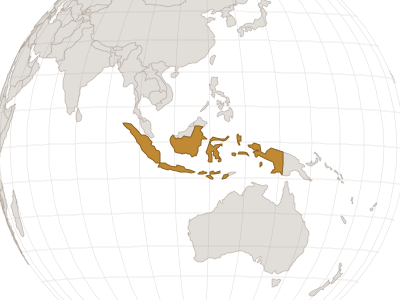
Indonesian researchers measured plant, fruit and seed traits of 31 Liberica-group coffee trees in three agroforestry landscapes in Sumatra and Java. Fruit and seed characters explained most of the variation. Trees on acidic Sumatran peat were more varied and bore small, thick-pulped fruit, while Javanese trees were more alike, and the authors urge conserving local trees for breeding.
Key points
- The sites were Betara in Jambi, on lowland peat at 15 to 21 m with soil pH 3.5 to 4.5, and Wonosalam (600 to 700 m) and Silo (350 to 425 m) on mineral soils in East Java.
- The first principal component, dominated by fruit and seed traits, accounted for 30.49 percent of the variation.
- Clustering sorted the trees into five groups; the largest, of 18 trees, held most of the Javanese accessions.
- One tree from Silo and one from Jambi stood alone as outliers that the authors single out for further study.
- The trees have not yet been checked against reference genetic data, so their exact species identity remains unconfirmed.
The team, led from Universitas Brawijaya with the State University of Malang and Universiti Malaysia Sarawak, studied Coffea liberica and C. dewevrei (excelsa), which it groups under the label 'Liberoid'. The three landscapes differ sharply. In Betara the coffee grows on hot, humid, shaded peat among areca nut, oil palm and coconut; Wonosalam, in the Anjasmoro mountains, is cooler (about 26 °C) with durian, avocado, mango and banana for shade; Silo is hot, the least humid and the brightest of the three, with little shade left after sengon trees were felled and robusta dominating.
Principal component analysis put fruit and seed traits first (30.49 percent of variation), with the next two components adding 11.61 and 10.04 percent and plant size and vegetative structure forming a secondary source of difference; eight components together explained 79.62 percent. Hierarchical clustering then split the 31 accessions into five groups. Most Javanese trees fell into one large but internally varied cluster of 18, while Jambi trees made up a cluster of eight (with one Wonosalam tree), a cluster of three, and one of the two single-tree outliers.
The authors link the patterns to soil. On very acidic, waterlogged peat the trees produced small fruit with thick pulp, while the near-neutral soils of Java went with faster vegetative growth; they suggest the spread among Jambi trees may also reflect mixed sources of planting material. Because the local accessions have not been compared with reference genetic data, they keep the 'Liberoid' label until species identity is confirmed, and they argue the trees should be conserved as a base for breeding varieties suited to particular landscapes. The paper appeared in Tropical Life Sciences Research.
The numbers
- Accessions studied
- 31accessions
- Agroforestry landscapes sampled
- 3landscapes
- Variation explained by first principal component (fruit and seed traits)
- 30.49%
- Variation explained by first eight components
- 79.62%
- Phenotypic clusters
- 5clusters
- Trees in the largest cluster
- 18trees
- Betara (Jambi) site elevation, highest
- 21m a.s.l.
- Wonosalam (Jombang) site elevation, highest
- 700m a.s.l.
- Betara peat soil pH, lowest
- 3.5pH
Sources
- Peer-reviewed study Phenotypic Variability of Liberoid Coffee (Coffea liberica and C. dewevrei) Across Sumatera and Javanese Landscapes: Foundational Insights for Coffee-based Agroforestry Tropical Life Sciences Research (Penerbit Universiti Sains Malaysia)doi.org Published Read
- Peer-reviewed study Phenotypic Variability of Liberoid Coffee (full text PDF) Tropical Life Sciences Researchejournal.usm.my Published Read
More coffee news
All stories- Origins
El Niño strengthens again; NOAA puts odds of a record event near 60%
El Niño grew stronger in October, NOAA's Climate Prediction Center said on 12 November 2026, with sea temperatures in the Niño-3.4 region 2.5C above normal. It gives better than a 79% chance of a strong-to-very-strong event through January to March 2027 and about 60% for a record-breaking one. Colombia's growers' federation and the ICO both flag risks for coming coffee harvests. - Events
Pan Wei of China wins the 2026 World Barista Championship in Panama City
Pan Wei, representing China, won the 26th World Barista Championship at World of Coffee Panama on 25 October with a final score of 575.5. Shing Win of Malaysia was second on 567.0 and Frederick Ruben of the United Arab Emirates third. Pan Wei had qualified only fourth from the semi-final before taking the six-person final. - Events
First UN-recognised International Coffee Day marked at FAO headquarters in Rome
FAO held the first International Coffee Day recognised by the United Nations at its Rome headquarters on 1 October 2026, after the General Assembly designated the date on 10 March. Representatives of Brazil, Ethiopia, Indonesia and Italy spoke and 13 countries poured their coffees. FAO used the day to stress that up to 25 million farmers depend on coffee.