Science and health Ethiopia
Ethiopian farmers move coffee above its traditional altitude as the climate warms
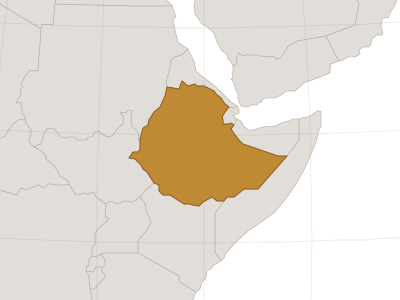
A study in southwestern Ethiopia found smallholders planting shaded coffee above 2,000 metres, beyond the crop's traditional range of about 1,200 to 2,000 m there. All 30 farmers interviewed cited climate change, most often warmer temperatures, and most planted on former open land rather than in forest, adding tree cover. Of 30 neighbours who had not yet switched, 26 planned to.
Key points
- 93 percent of the coffee-planting farmers named higher temperatures; 53 percent also wanted a higher, steadier income and 27 percent wanted to escape wildlife raids on annual crops.
- Eight of the 30 plots had been made from forest and 22 from open land.
- Woody species richness and diversity were similar in both kinds of plot, though forest-derived plots held larger trees.
- No farmer planned to give up coffee, and the only drawback anyone named was the high cost of getting started.
- Neighbours were the main source both of the idea to plant coffee (40 percent) and of the know-how (47 percent).
Researchers from Stockholm University, the Swedish University of Agricultural Sciences, Addis Ababa University and Haramaya University worked in the Gomma and Gera districts of Jimma zone, where mean daily temperatures run from 12 to 28 °C and rainfall from 1,500 to 2,100 mm a year. They chose 30 coffee sites between 2,007 and 2,358 metres, each with more than 0.1 ha of coffee and at least 0.5 km apart, interviewed the farmer at each, and recorded every tree and shrub on a 30 by 30 metre plot. For each site they also interviewed one randomly chosen neighbour who had not planted coffee.
Every farmer gave climate change as a reason, chiefly warmer weather; two said rainfall had dropped from levels that used to be too high for coffee. Other common reasons were income, copying neighbours (30 percent), escaping crop raiding and falling yields of other crops (23 percent). Besides income, farmers valued coffee for their own drinking (77 percent), wood for fuel and building (53 percent) and shade (47 percent).
Forest-derived and open-land plots had similar numbers and diversity of woody species, but forest plots had larger trees and a somewhat different species mix, with plot type explaining 6 percent of the variation in composition. Open-land plots also varied more from one another. Elevation and time since planting made no difference to the plant community.
Of the 26 neighbours planning to plant coffee, only one intended to do so inside existing forest, and the commonest reasons neighbours gave for not having planted yet were land needed for other crops (33 percent) or grazing (20 percent) and a lack of money to start (27 percent). The authors expect open-land coffee agroforestry to keep spreading in the higher zone, which they see as good for tree cover and biodiversity in a global hotspot. They also note that studies elsewhere have found hidden social costs of coffee, such as child labour and heavier household workloads, which the farmers did not mention. The open-access paper appeared in Ambio.
The numbers
- Study sites above the traditional range
- 30sites
- Lowest site elevation
- 2,007m a.s.l.
- Highest site elevation
- 2,358m a.s.l.
- Upper limit of the traditional coffee range in the area
- 2,000m a.s.l.
- Forest-derived coffee plots
- 8plots
- Open-land-derived coffee plots
- 22plots
- Farmers citing higher temperature
- 93%
- Farmers citing higher and more stable income
- 53%
- Farmers citing avoidance of crop raiding
- 27%
- Farmers valuing coffee for own consumption
- 77%
- Neighbouring farmers planning to plant coffee (of 30)
- 26farmers
- Variation in species composition explained by plot type
- 6%
Sources
- Peer-reviewed study Climate-mediated upward shift of coffee agroforestry and associated reforestation in Arabica coffee's native range Ambio (Springer Nature)doi.org Published Read
More coffee news
All stories- Events
First UN-recognised International Coffee Day marked at FAO headquarters in Rome
FAO held the first International Coffee Day recognised by the United Nations at its Rome headquarters on 1 October 2026, after the General Assembly designated the date on 10 March. Representatives of Brazil, Ethiopia, Indonesia and Italy spoke and 13 countries poured their coffees. FAO used the day to stress that up to 25 million farmers depend on coffee. - Science
Small crossover trial: blood pressure lower after hibiscus tea than after coffee
In a randomised crossover trial with 24 healthy young adults, Saudi researchers found blood pressure during three hours of unbroken sitting was lower after hibiscus tea than after coffee, by 4.2 mmHg systolic and 3.3 mmHg diastolic. The authors treat the result as preliminary and say larger controlled studies are needed before drawing long-term conclusions. - Science
UK Biobank study links coffee drinking with lower atrial fibrillation risk
In a UK Biobank cohort of 495,269 adults followed for a median of 13 years, coffee drinkers were 7 to 11 percent less likely than non-drinkers to develop atrial fibrillation, with the lowest risk at two to three cups a day. The study is observational, and the authors say it shows an association, not that coffee prevents the condition.